
When the cold air sweeps across Southern Illinois during late autumn and winter, a reliable home heating system shifts from a simple comfort to an absolute necessity. Homeowners in Carbondale, Herrin, and across Williamson and Jackson counties rely heavily on their gas and electric furnaces to maintain a safe, cozy indoor environment. However, mechanical equipment undergoes significant wear and tear, and unexpected heating breakdowns can leave your household exposed to freezing temperatures.
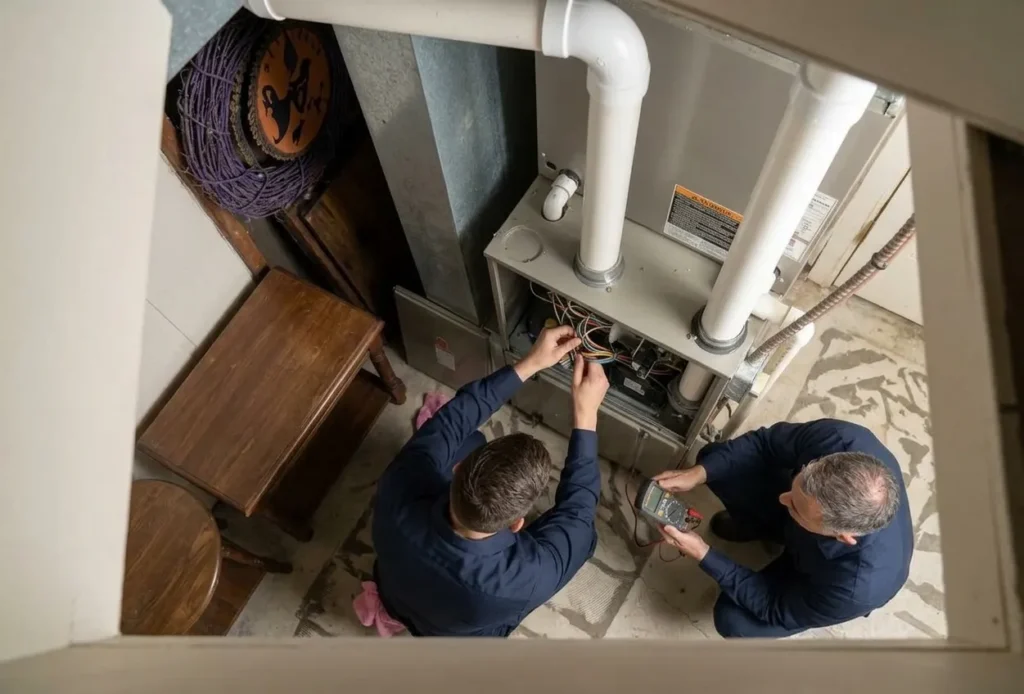
Knowing how to spot the early signs of trouble—and understanding when a simple fix will do versus when you need professional furnace services in Carbondale, IL—can save you thousands of dollars in unexpected replacement costs, protect your household from dangerous carbon monoxide leaks, and keep your unit operating efficiently all winter long.
In this guide, we break down the most frequent furnace issues facing local homeowners, offer a practical DIY troubleshooting checklist, explain critical safety hazards, and help you determine exactly when to bring in a certified HVAC professional.
You should call a professional HVAC technician immediately if your furnace displays any of the following critical symptoms:
For minor issues like a slightly sluggish airflow or a thermostat that needs fresh batteries, basic home troubleshooting is appropriate. However, internal mechanical repairs, gas line adjustments, high-voltage electrical work, and heat exchanger inspections strictly require certified expertise.
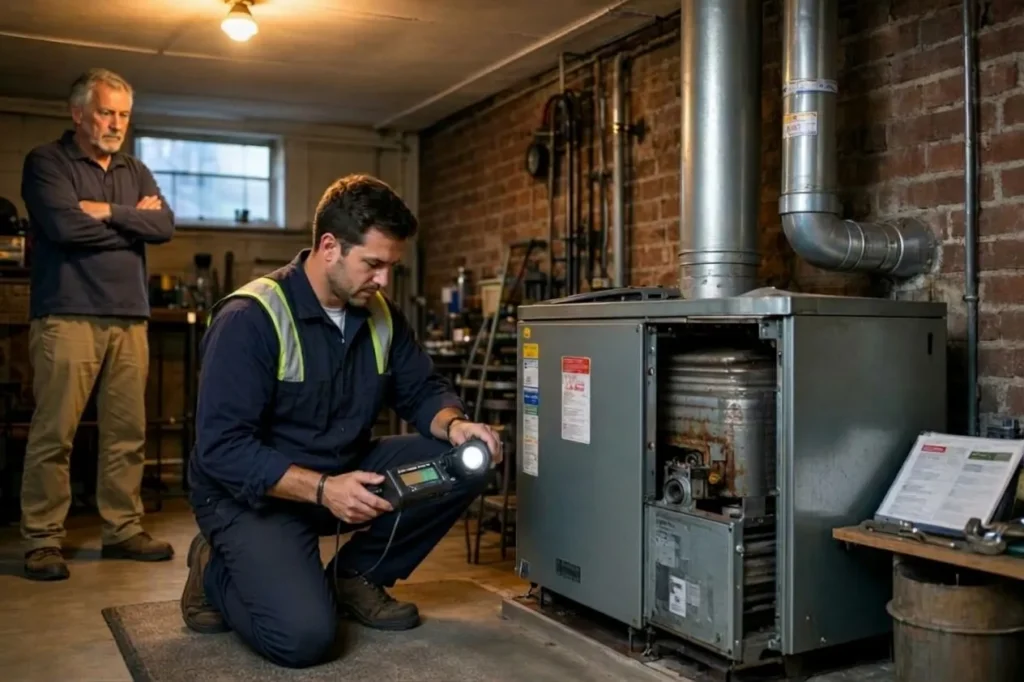
Southern Illinois winters bring erratic weather patterns—ranging from sudden freezing rain to prolonged sub-zero cold snaps. This fluctuating demand forces furnaces to work double time, highlighting underlying mechanical flaws. Here are the most common heating problems homeowners encounter in Carbondale and Herrin.
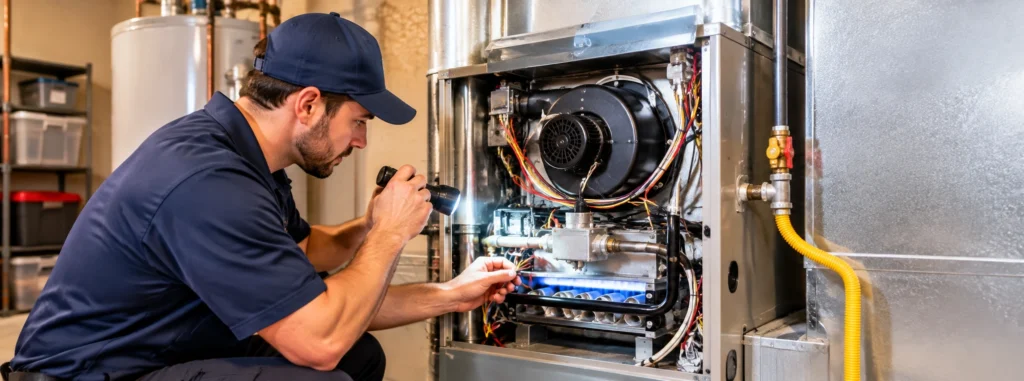
A dirty air filter is the single most frequent cause of furnace failure. As dust, pet dander, and debris build up on the filter material, airflow into the furnace cabinet drops dramatically.
Modern gas furnaces utilize electronic hot-surface igniters or intermittent pilot systems to ignite the burners, whereas older units rely on a continuous standing pilot light.
The flame sensor is a tiny metal rod positioned near the burner assembly. Its job is to detect whether a flame is present when gas flows. If no flame is detected within a few seconds, it instantly cuts off the gas supply to prevent unburned gas from accumulating inside your home.
Over time, carbon buildup and oxidation coat the sensor rod. When this happens, it can no longer detect the flame, causing the furnace to light for 3 to 5 seconds and then shut off completely.
The heat exchanger is the metal chamber where fuel burns to create heat. Air passes over the outside of this sealed chamber, absorbs the warmth, and carries it into your living areas while combustion fumes are safely vented outside.
Due to years of thermal expansion and contraction—or excessive heat caused by dirty air filters—the heat exchanger can crack or rust through. A cracked heat exchanger allows toxic combustion gases, including carbon monoxide (CO), to leak directly into your home's air supply.
Sometimes the furnace itself is completely healthy, but the command center—the thermostat—is failing. Incorrect settings, drained batteries, frayed low-voltage wiring, or uncalibrated internal sensors can prevent the furnace from receiving the signal to turn on.
The blower motor drives the fan that circulates conditioned air throughout your ductwork. Worn-out bearings, blown capacitors, or snapped fan belts (on older belt-driven models) will cause air circulation to stall. You may hear loud squeaking, screeching, or humming sounds coming from the blower compartment.
Before booking a service visit, running through a quick DIY checklist can save you time and money. Some furnace issues stem from simple user errors or basic maintenance oversights that you can resolve yourself in minutes.
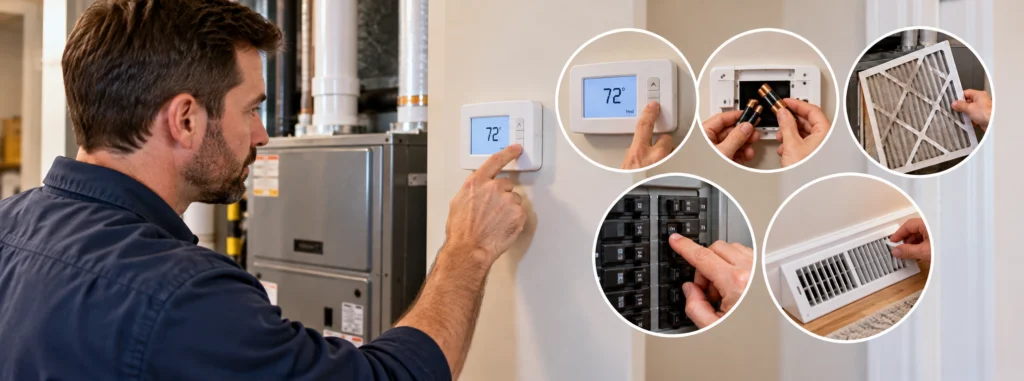
Caution: If these steps do not restore heating within 15–20 minutes, stop troubleshooting and refrain from dismantling internal panels. Call a professional HVAC technician to inspect the system safely.
While replacing a filter is safe for homeowners, attempting complex internal repairs on a furnace can cause severe property damage, void your manufacturer warranty, or pose lethal safety hazards. Contact a professional providing certified furnace repair in Herrin, IL or Carbondale right away under the following conditions:
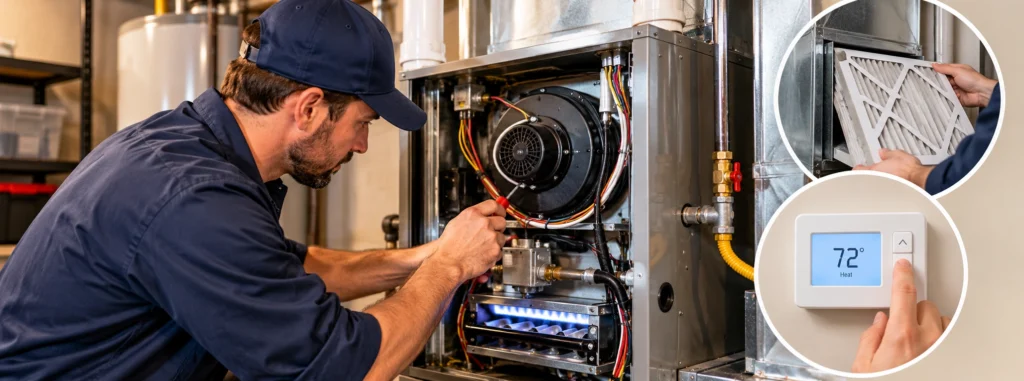
If you smell a distinct sulfur or rotten egg scent near your furnace or around your home, act immediately:
Properly burning natural gas produces a crisp, blue flame. If you look through the burner sight glass and observe a flickering yellow or orange flame, it indicates incomplete combustion. This condition produces excess carbon monoxide gas.
If your home's CO detector sounds, immediately open windows for ventilation, evacuate the property, and call emergency services and an HVAC specialist to inspect for a cracked heat exchanger or blocked flue pipe.
When a furnace turns on, operates for 30 to 90 seconds, shuts down, and repeats this loop continuously, it is "short-cycling." Beyond driving up your monthly utility bill, short-cycling places extreme mechanical stress on the compressor, igniter, and electrical relays. A technician will need to inspect the flame sensor, high-limit control, or duct sizing to resolve the issue.
Modern furnaces run relatively quietly. When you hear jarring mechanical noises, specific components are failing:
If your furnace trips the breaker every time it kicks on, never attempt to bypass the breaker or hold it in place. A tripping breaker signals a severe electrical short circuit, a grounded blower motor, or an overloaded transformer that can trigger an electrical fire if neglected.
To help you decide how to handle your furnace problem, use this clear breakdown comparing tasks suitable for homeowners versus those that require a licensed technician:
| Maintenance Task / Problem | DIY Friendly? | Required Expertise | Potential Risk if Mismanaged |
| Air Filter Replacement | Yes | Basic home maintenance | Reduced airflow, system overheating |
| Thermostat Battery Change | Yes | Simple tool use | Inaccurate readings, no heat call |
| Clearing Condensate Line | Yes | Basic cleaning | Minor water leaks |
| Flame Sensor Cleaning / Repair | No | Certified HVAC Tech | Broken sensor, complete shutdown |
| Igniter Replacement | No | Electrical & HVAC certified | Cracked component, electrical shock |
| Heat Exchanger Inspection | No | Specialized testing tools | Carbon monoxide poisoning, fire |
| Gas Valve Adjustment | No | Licensed gas/HVAC specialist | Gas leak, sudden explosion hazard |
| Blower Motor Replacement | No | Advanced electrical/HVAC | Motor failure, electrical damage |
Many homeowners wait until their furnace breaks down completely on a freezing winter night before calling an HVAC contractor. However, scheduling an annual heating system inspection during the early autumn months is one of the smartest investments you can make for your home.
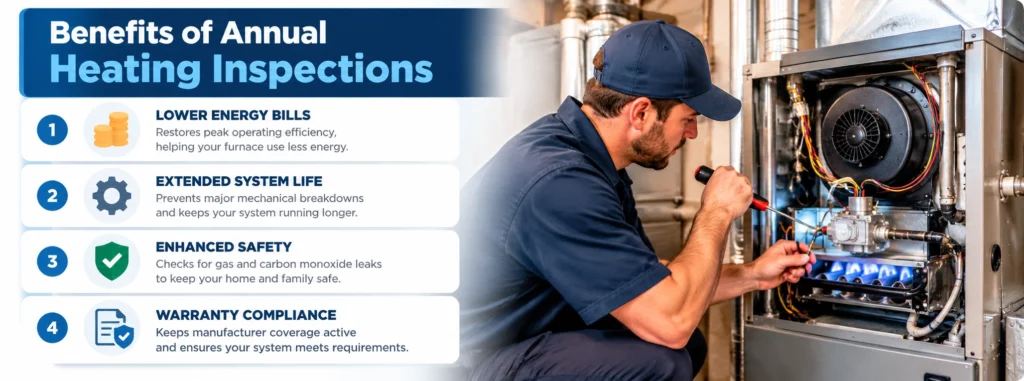
During a thorough tune-up and safety inspection, a technician performs a multi-point check of your entire heating assembly:
To get the most out of your heating system in Carbondale and Herrin, follow these tailored regional tips from local HVAC professionals:
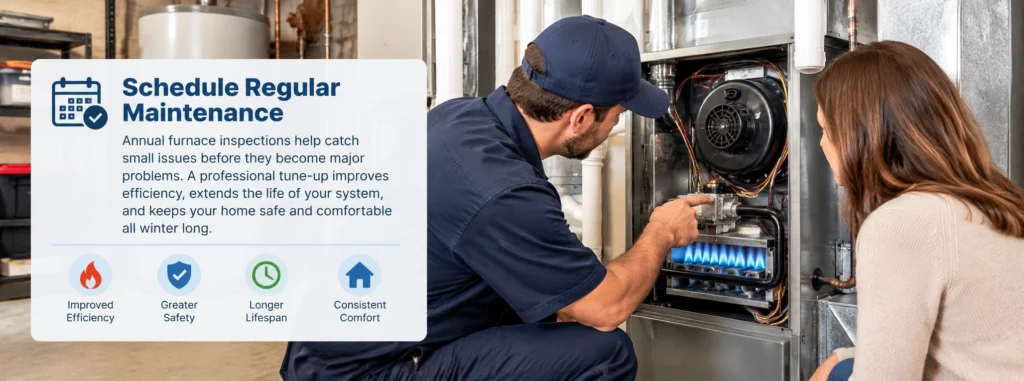
Don't wait for the first winter freeze to test your heater. Turn your thermostat to heat mode in early October. If you notice unusual smells, slow response times, or strange noises, you'll have plenty of time to book a service appointment before contractors face peak winter demand.
Many homes in Southern Illinois feature crawl spaces or unconditioned basements. Exposed ductwork in these areas can lose up to 30% of its heated air through unsealed joints before it ever reaches your living rooms. Have your ducts sealed and insulated to reduce the strain on your furnace.
Modern high-efficiency furnaces (90%+ AFPI) vent combustion gases through PVC pipes that exit through the side of your home. During heavy snowfall or severe winter storms, drifted snow, ice, or fallen leaves can block these vents. A blocked exhaust pipe triggers an automatic safety shutdown. Keep the area around your exterior vents clear at all times.
Cold winter air in Jackson and Williamson counties drops indoor humidity levels dramatically. Dry air feels colder to human skin, tempting you to turn the thermostat up higher than necessary. Installing a whole-home humidifier helps retain warmth, improves indoor air quality, and lowers heating demands on your system.
For standard 1-inch pleated air filters, inspect them monthly and replace them every 30 to 60 days. If you have pets, allergies, or a large household, you may need to replace them every 30 days during the peak heating season. Thick 4-inch to 5-inch media filters can last between 6 and 12 months.
A furnace blowing cold air is typically caused by: A dirty air filter tripping the high-limit switch. An extinguished pilot light or faulty electronic igniter. A dirty flame sensor shutting down the gas valve. A thermostat set to "Fan ON" instead of "Fan AUTO" (which causes the fan to blow continuously even when the burners aren't firing).
With regular annual maintenance, a well-built gas furnace lasts 15 to 20 years. Electric furnaces can last 20 to 25 years. If your furnace is over 15 years old and requiring frequent, costly repairs, replacing it with a high-efficiency system is often more economical than continuing to repair it.
Routine maintenance tune-ups and inspections generally cost between $80 and $150. Minor repairs (such as replacing a flame sensor or capacitor) range from $150 to $450, while major repairs (like replacing a blower motor or control board) can cost $500 or more. Regular inspections help you catch minor issues before they turn into costly overhauls.
When winter weather settles over Carbondale, Herrin, and the surrounding Southern Illinois communities, having a dependable heating system is essential for your family's safety and comfort. While simple tasks like changing your air filter are easy to handle on your own, mechanical repairs, gas safety checks, and annual tune-ups require trained, certified professionals.
If your system is making strange noises, blowing cold air, or needs an annual tune-up, don't wait for a complete breakdown in the middle of a winter freeze. Reach out to the certified team at Collard Heating & Air Conditioning to schedule a comprehensive inspection or repair service today. Protecting your home, lowering your energy bills, and maintaining reliable heat all winter long is just a call or click away.
